2026
Rapidan Camp is a historic site within Shenandoah National Park and is famously known as a vacation home for Herbert Hoover. The historic door at the rear of the Brown House was rotting from moisture, and the exterior of the bottom rail and stiles required a complex dutchman repair.
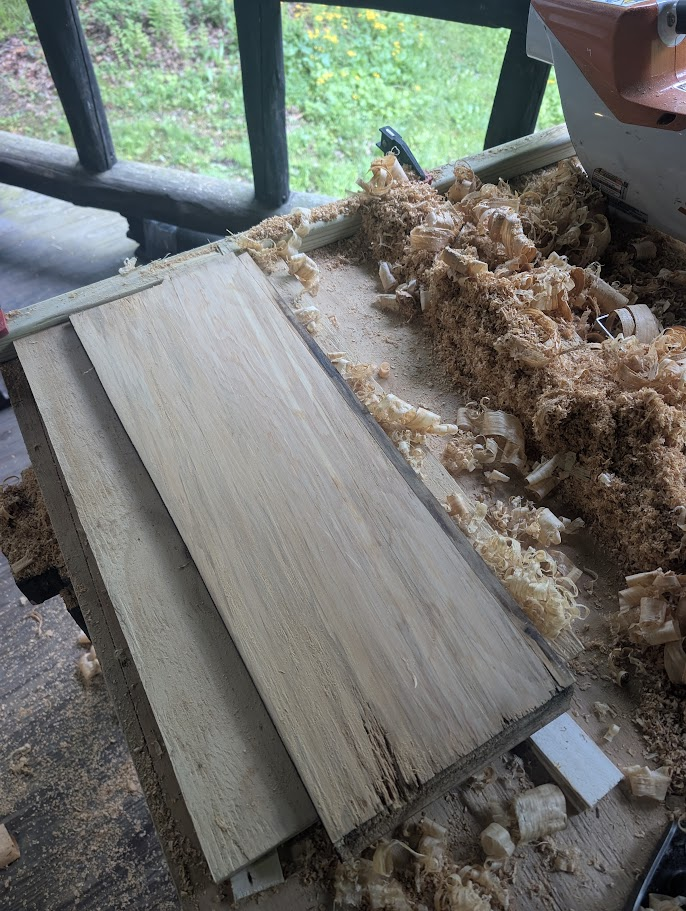

The rotting material was routed and planed with both a wooden fore plane and rabbet plane to preserve as much interior fabric as possible. Not all material was removed so as not to destroy the existing moulding.
Due to the excess moisture in the area, the door had warped significantly, proving challenging for squaring the project without affecting the patina of the interior side.
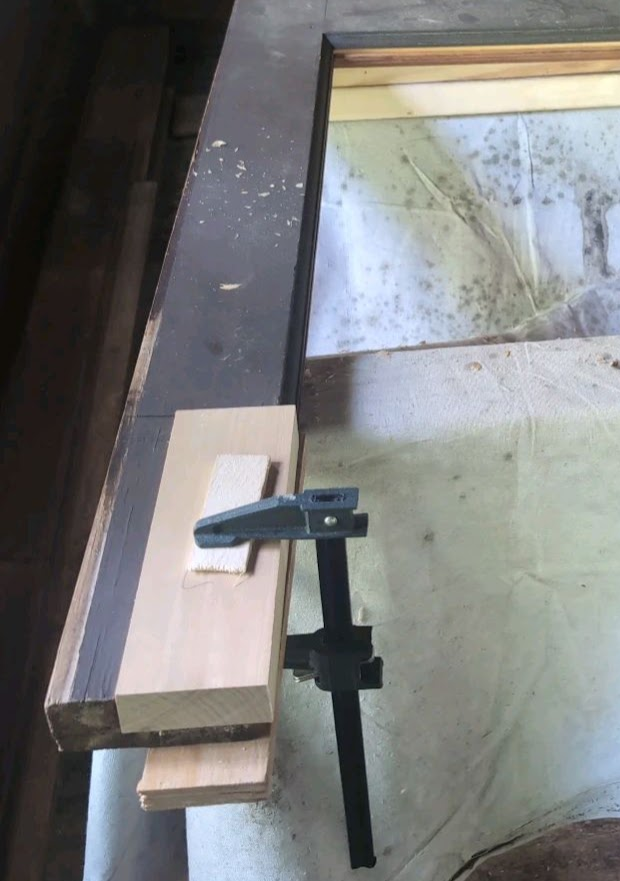
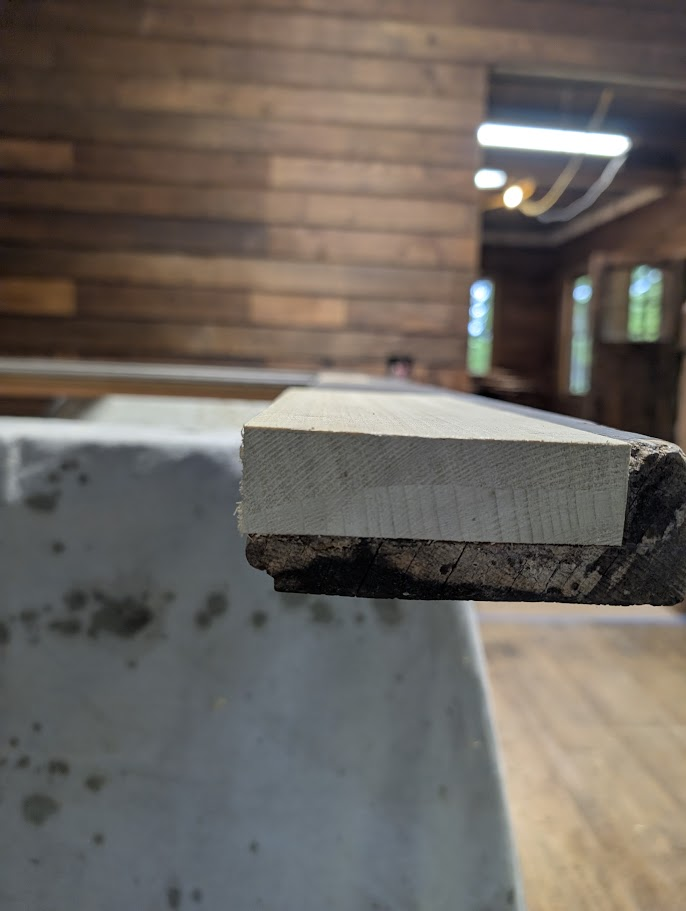
The original material is believed to be hemlock, a once widely available tree from the region, but the repairs were done with poplar due to its easy workability, the fact that it would be painted, and the inaccessibility of hemlock.
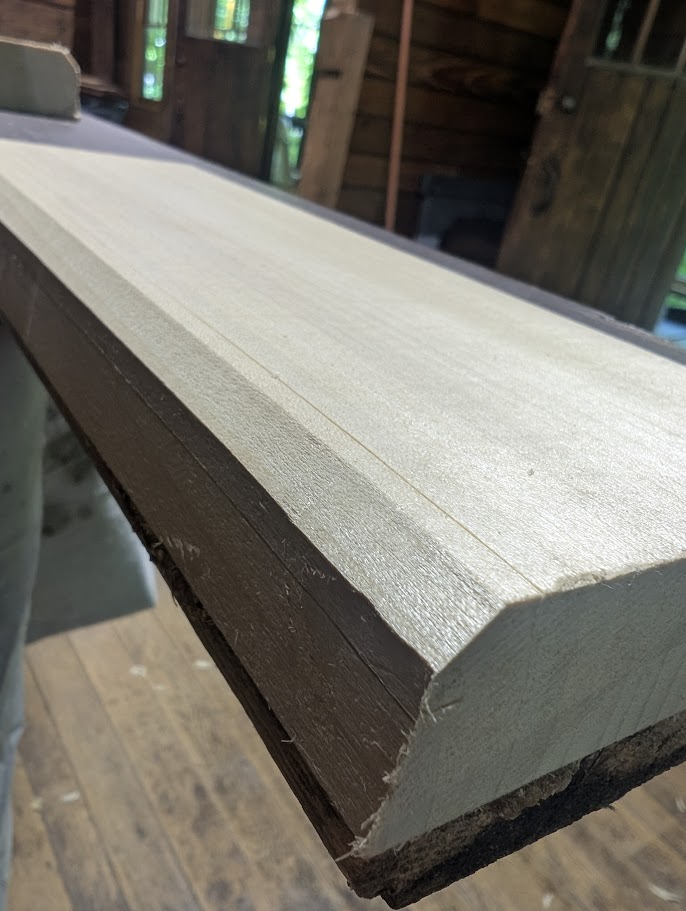
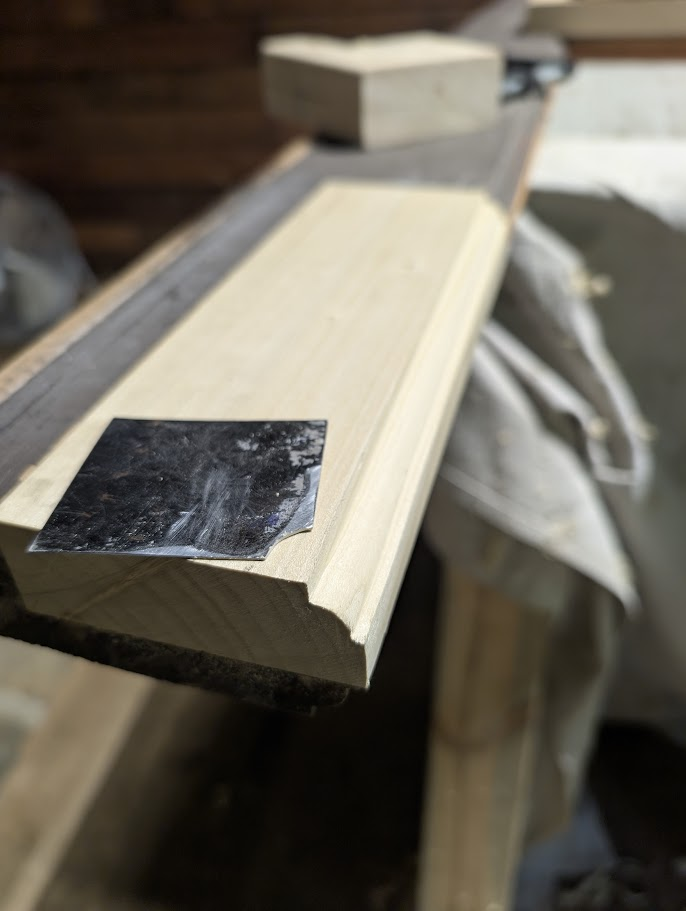
In order to match the moulding, I decided to do it by hand and use scratch stock, a simple technique for replicating moulding of any variety. The material is first chunked off by planing a chamfer, then it’s scratched into the wood using the burr on the stock to do the cutting. This leaves the surface already burnished, and it is unnecessary to finish further.
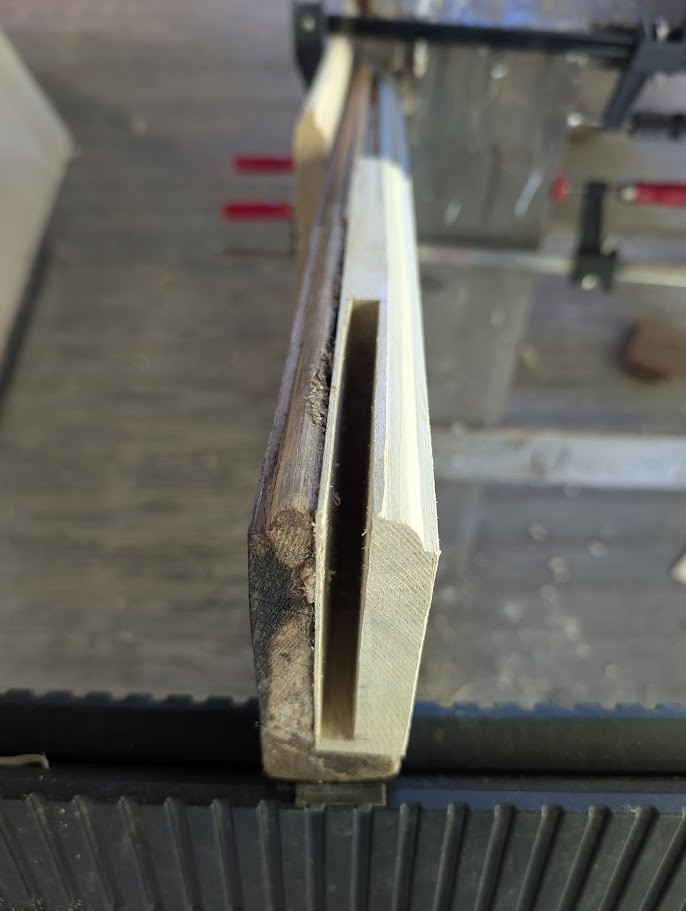

Mortises were hand cut in the stiles to allow for the tenon on the rail as well as the middle panel.

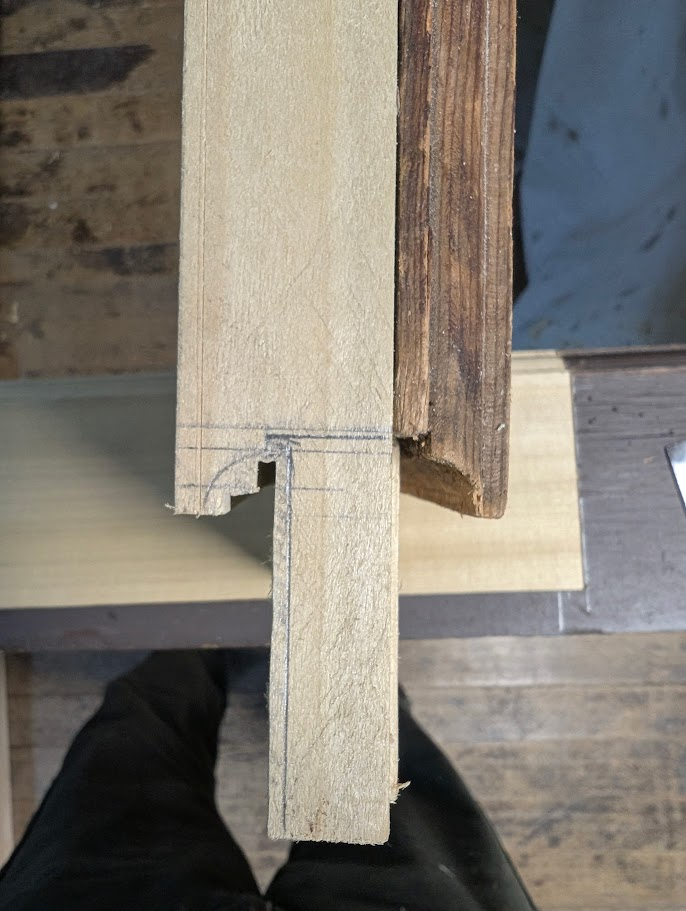
The cover moulding was transcribed from the original and slowly chunked out with a table saw, then further refined using a Ryoba saw and rasp.
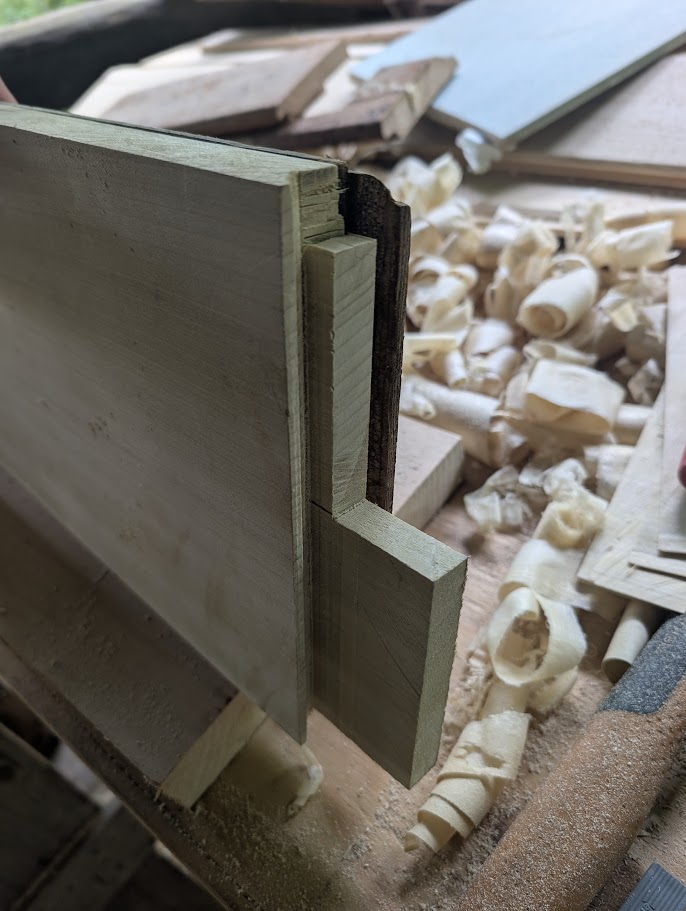
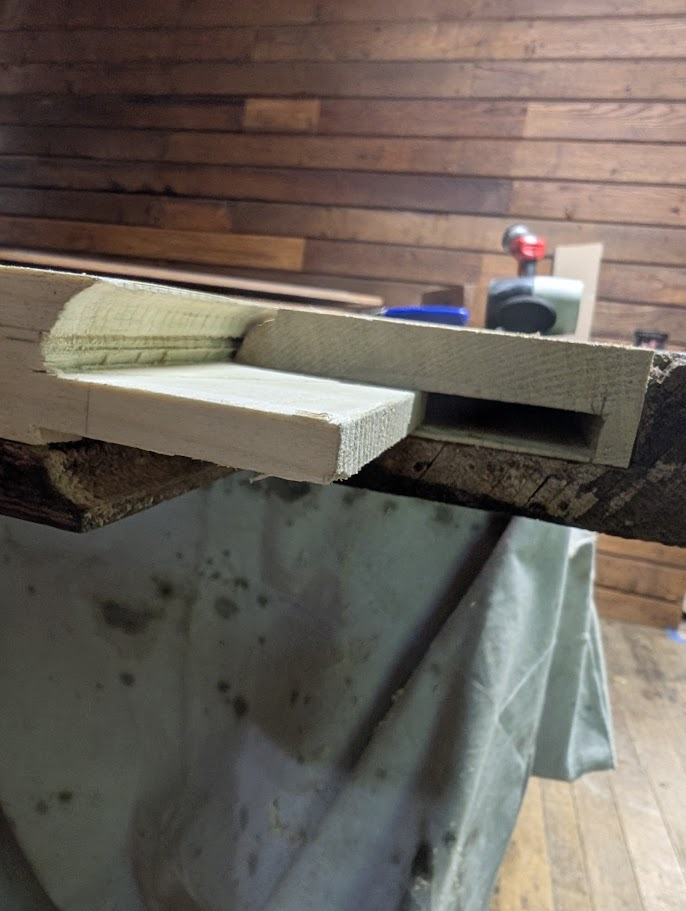
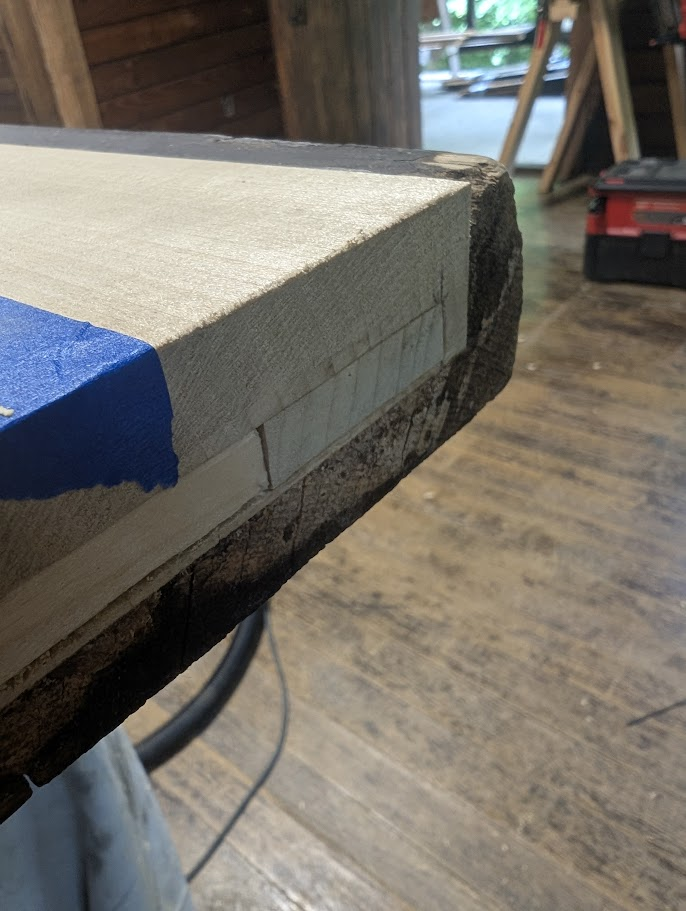
The matching tenon on the bottom rail. I mistakenly cut the mortise far too deep because I neglected the amount of extra width I had for the tenon. I fixed this with a plug.

The dry fit for the dutchman. The right stile presented a larger gap than intended due to user error and warping within the door. This was fixed later with wood filler and painted.

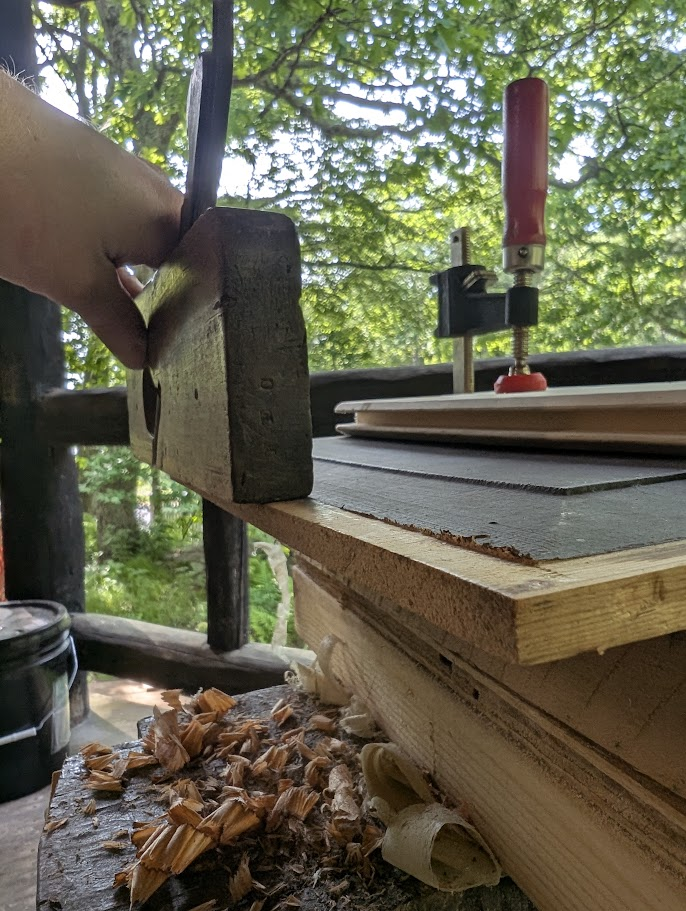

The lower panel had a heavy cup due to moisture and required new biscuits keep it together. The cup also caused issues with the fit, and I planed down the edges with a rabbet plane.
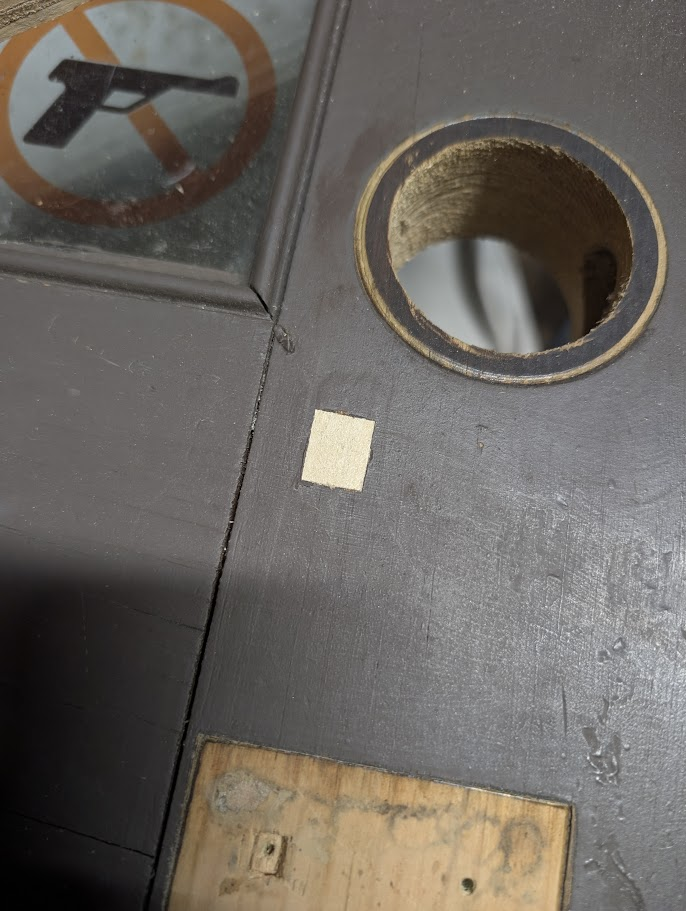

Plugs were made to hide the sprigs that run through the tenons.
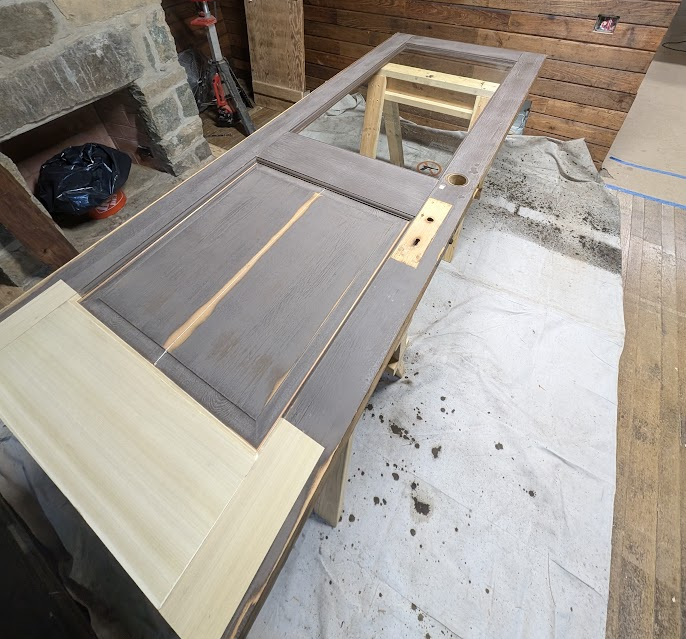
The exterior received a final sanding before painting, and the interior was oiled with boiled linseed oil.
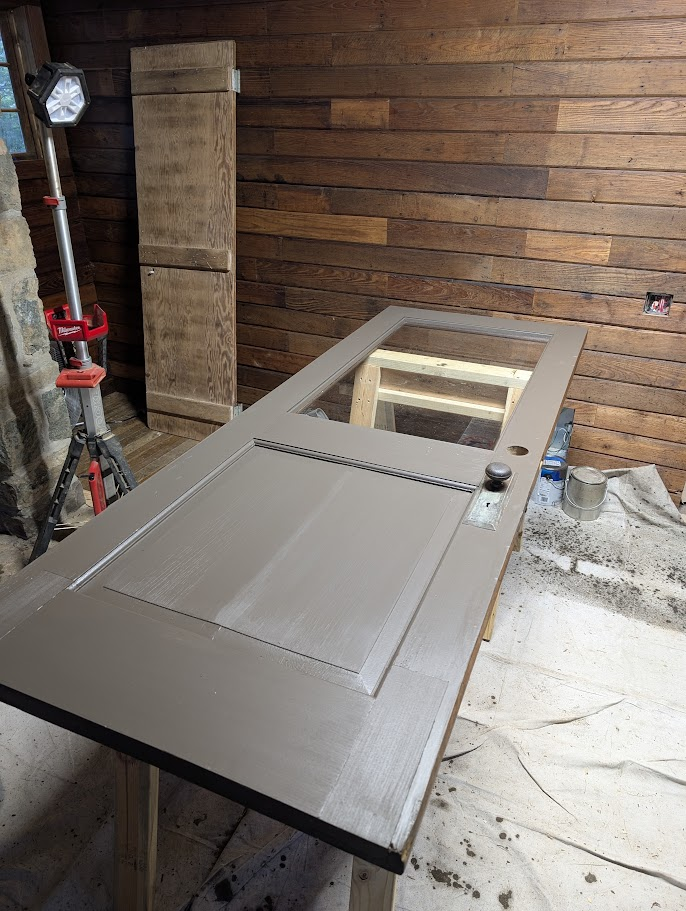

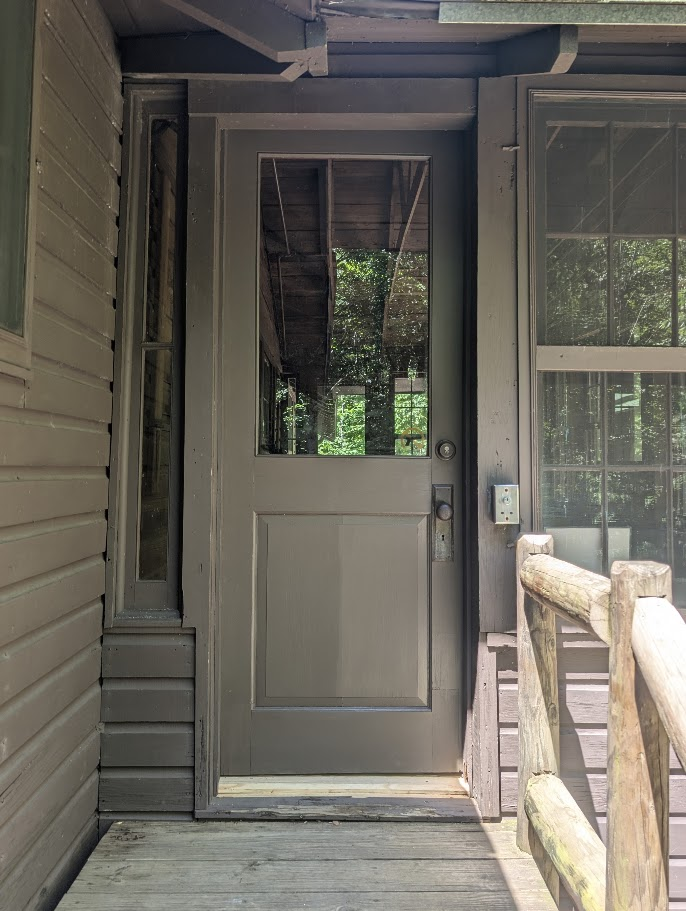
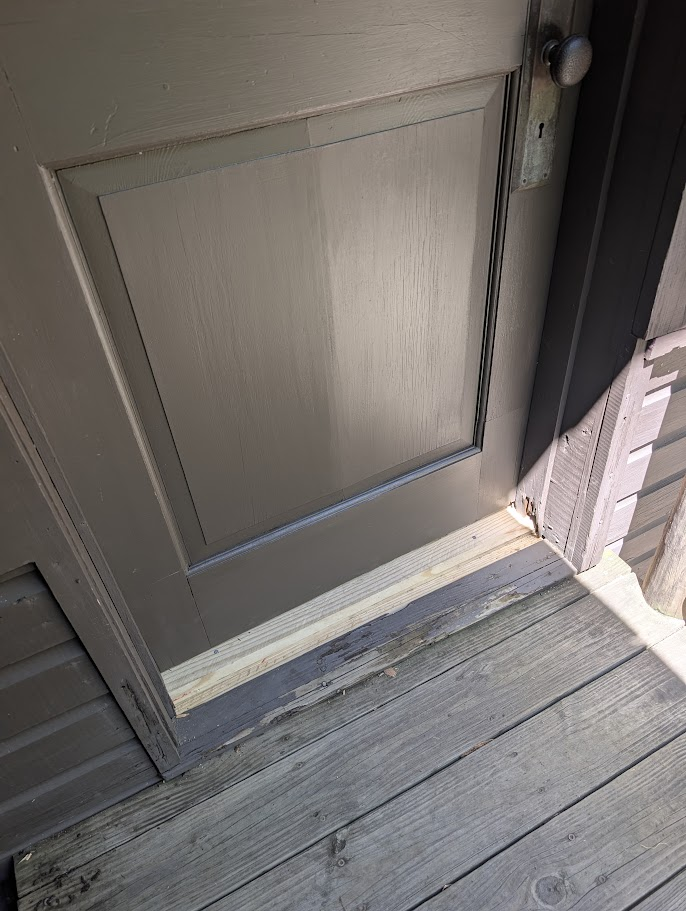
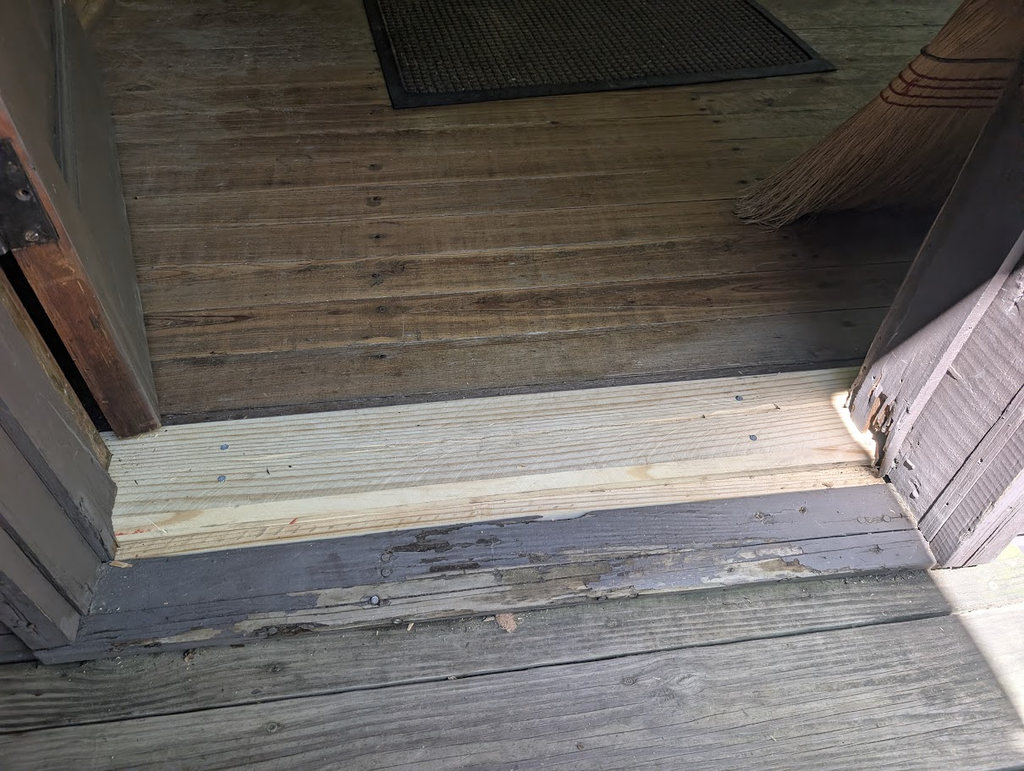
After accidentally stepping through the threshold, a quick field fix was installed temporarily for safety.